The sheep breeds on my farm

Polypay
Polypay sheep are a mix of 4 different breeds (hence the “Poly”) which were specifically picked and crossed to earn high dollar for the farmer in the US sheep market (which gives us the “pay” side of things). The four breeds and their purposes were Finsheep (many lambs and fast maturing), Dorset (mothering, fast maturity, out of season breeding, and great meat qualities), Targhee (long breeding season, wool quality, and large size), and Rambouillet (wool quality, ability to thrive in all conditions, and productivity). This relatively new breed of sheep was first put together in the US in 1970 and named in 1975.
Ewes tend to weigh in at 190 lbs and rams closer to 275, the Polypay breed is the foundation of my flock. Since I practice accelerated breeding (meaning that ewes will have three sets of lambs in two years) I need my sheep to mature quickly and bounce back, ready to breed again as soon as possible. Polypay are known to be a quick maturing variety and are used in many commercial meat sheep operations because they can naturally breed during any season (most sheep breeds can only breed during the fall and early winter). Another benefit of the breed is their tendency to have multiples, it is very common for the ewes to have two or three lambs and take good care of them as well.
Polypay wool is of fine quality and usually grows to 4 inches in one year. They don’t have a lot of woo on their faces or bellies, but still do boast those “mutton chops” on their cheeks in most cases. Their wool is very oftenused by handspinners though you probably wont see it advertised in commercial or even boutique yarns as the breed is not well known for their wool.

Ile De France
I added the Ile de France breed to my flock sort of by chance. I was looking to do my big initial sheep purchase in 2023 and I couldn’t find anyone who had enough of exactly what I wanted from one farm. While I was looking for “pure” Polypays, I ended up going with a recommendation to a very reputable breeder, Richard Erhardt, who just happened to have a group of Ile de France crosses that fit my needs.
This breed originated in France in the early 1800’s.
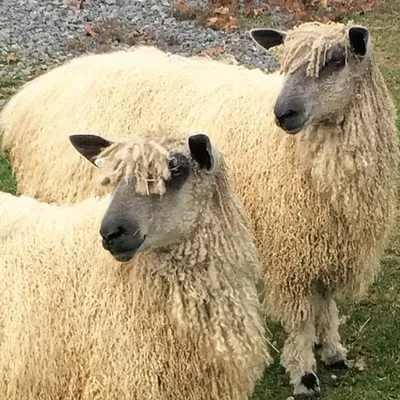
Wensleydale
From the North American Wensleydale Sheep Association website:
“The Wensleydale Longwool breed of sheep originated in North Yorkshire early in the 19th Century from a cross between a long since extinct local longwool breed from the region of the River Tees and an outstanding Dishley Leicester ram named ‘Bluecap’. The breed was developed to produce hardy rams for crossing onto hill ewes, together with high quality and valuable lustre fleeces. The breed is probably unique in that its Association is able to not only identify a foundation sire, but also trace that ram’s parentage, year and place of birth and breeder. ‘Bluecap’ was born in 1839 in the hamlet of East Appleton, five miles NNW of Bedale in North Yorkshire. His qualities, which determined the breed type without any further infusion of Leicester blood, were his dark skin, superb quality of wool and size – 203 kgs (448 lbs) as a two shear. The breed type was not named until 1876, when a name was required for classes at the Yorkshire Show."
Ewe Know It Farms has just one pure Wensleydale, a ram named Petrichor, but many half bred cross lambs in 2026 and beyond. Lynn originally saw this breed at the Maryland sheep and wool festival in 2023 and fell in love with their curly, shiny fleece. Being a large bodied sheep with well known dairy traits and pasture raising potential, they were an easy add to the flock.
Many of the custom lambs that are sold directly to customers from Ewe Know It are Wensleydale crosses so that we can keep and tan their hides to make lamb skins with this amazing wool.

East Friesian
I have just two pure bred East Friesians on my farm, but I like keeping their lambs (which are all cross breeds) in the breeding flock to add milkiness to the group. My dairy girls (Penny and Muffin) along with their half EF daughters provide delicious, sweet, fatty milk that I can make into all sorts of dairy products for my family and I. Sheep’s milk is 6-7% fat and often contains twice as much protein as whole cow’s milk. It is also easier to digest than cow’s milk as the fat globules are smaller and homogenized and the milk contains only A2 proteins which means many people with sensitivity to milk are just fine with sheep’s milk. EFs are very common in commercial sheep dairies, especially in cold climates, and they have a calm, docile personality. Due to their large size and wide frame, the breed is often crossed to produce meat lambs and the Canadian version of a Polypay (called the Rideau) includes East Friesian in a relatively high percentage to add milk volume to their ewes.
My East Friesians are just a little smaller than my Polypays, but you can always pick them out of the flock. East Friesians have absolutely no wool on their faces, legs, or tails (which means that their tails are often left un-docked and naturally long, which is the case with my girls as well) and some even have no wool on their bellies. Their wool coverage often makes them look like they are fancy ladies wearing a big coat and a fluffy scarf which matches their lofty attitude, preferring to chill out rather than investigate or be curious.
East Friesian wool is nothing to get excited over since it is quite coarse so it is usually used for something that does not touch the skin (like a rug). Because I first started out with just EFs, I have used a lot of their wool for hand spinning and I find it quite enjoyable. When I bought Muffin and Clover as two year olds they had never been shorn before so they had over 9 inches of matted wool on them, but the usual growth rate is about 4 or 5 inches a year.
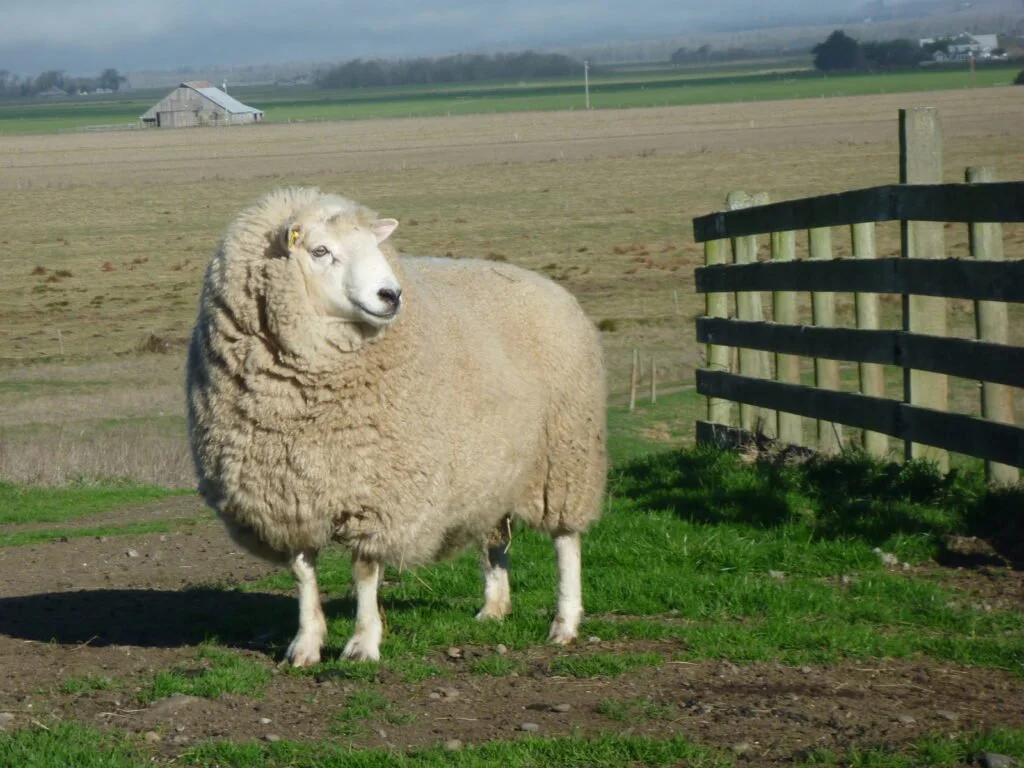
Perendale
From the North American Perendale Association website:
“Perendale sheep are common in New Zealand, where they originated, but are uncommon in North America. They are a dual-purpose breed, providing both meat and abundant high-quality wool that appeals to handspinners. Perendales are perfect “starter sheep”: easy lambers, excellent mothers, good parasite resistance, with feet that rarely need trimming and intelligent, sensible dispositions. They are “thrifty” sheep, thriving on even marginal forage (thanks to the Cheviots in their background) under conditions where other sheep might suffer. Sheep are medium in size (adult ewes averaging 140-170 lb; rams 220-260 lb), making them easy to handle, while producing lambs that reach market weight (~ 120 lb) at 8 months on 100% grassfed diets. Their meat is described as mild yet flavorful.”
Ewe Know It Farms has just one pure Perendale, a ram named Jasper, but many half bred cross lambs in 2026 and beyond. They are dense sheep and the cross of this ram over our Polypay ewes has produced beautiful looking market lambs and replacement ewe lambs alike.